
5 Signs Your Pool Pump Is About to Fail (Before It Leaves You With Green Water)
July 24, 2026
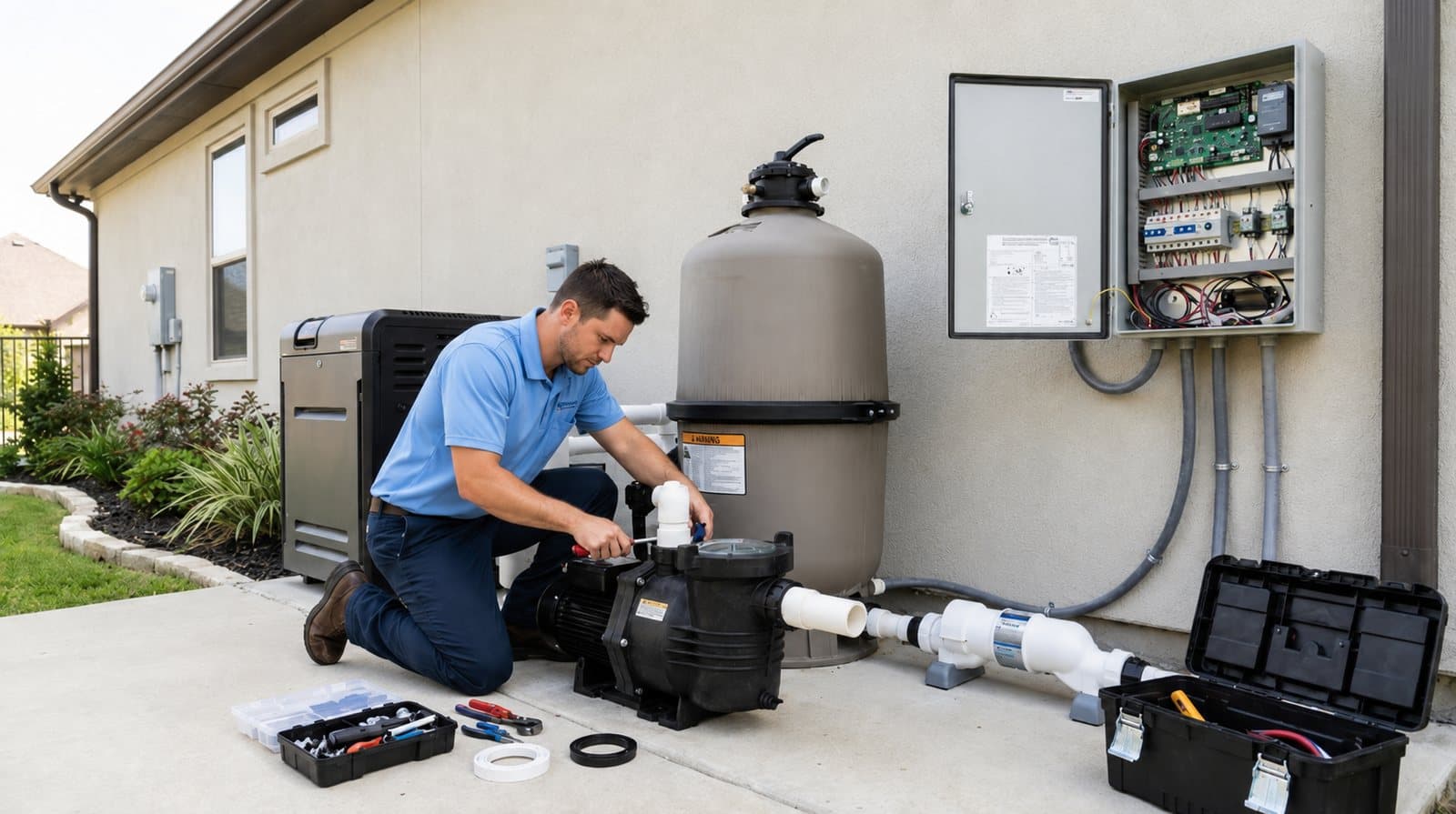
Your pool pump is the one piece of equipment doing the most work, all day, every day — circulating and filtering water so chemicals can actually do their job. When it starts to go, it rarely happens overnight. Here's what usually shows up first, and why catching it early saves you both money and a pool full of green water.
1. It's louder than it used to be
A healthy pump has a consistent hum. A grinding, screeching, or rattling sound almost always means the bearings are wearing out. This is one of the most common pump repairs we see, and it's also one of the cheapest to fix if you catch it early — waiting on it usually means the motor itself fails next, which is a much bigger repair.
2. Weak or inconsistent water flow
If your return jets feel weaker than they used to, or flow seems to surge and drop instead of staying steady, something in the system is restricted or struggling. Sometimes it's as simple as a clogged impeller. Sometimes it's a sign the pump motor itself is losing strength. Either way, weak circulation means weaker filtration — which shows up next as cloudy water even if you're testing and adding chemicals on schedule.
3. It won't prime, or loses prime repeatedly
A pump that won't hold prime is pulling in air somewhere it shouldn't — usually a loose fitting, a failing seal, or an air leak on the suction side. This one's worth calling in fast, because a pump running dry (or nearly dry) for extended periods can burn out the motor entirely, turning a seal repair into a full pump replacement.
4. Visible leaking around the pump housing
Any puddle or wet spot around the pump equipment pad is worth investigating immediately, not "keeping an eye on." Seal leaks get worse, not better, and water finding its way into the motor housing is one of the fastest ways to turn a small repair into a total loss.
5. It's tripping breakers or won't start at all
Electrical issues in pool equipment aren't a DIY situation — a pump that trips a breaker repeatedly, hums but doesn't start, or won't turn on at all can mean anything from a failing capacitor to a genuinely dangerous wiring problem. Stop trying to reset it and get it looked at.
Why catching this early actually matters in Babcock Ranch
Southwest Florida's heat means pool equipment already runs under more strain here than in most of the country — pumps work longer hours to keep up with faster chemical burn-off and heavier debris load from daily summer storms. A pump that's already showing early warning signs tends to fail faster here than it would in a milder climate. What might be a "keep an eye on it" issue elsewhere is often a "get it looked at this week" issue in Babcock Ranch.
What to do next
If any of this sounds familiar, don't wait for total failure — a pump that dies completely usually takes your filtration (and your water clarity) down with it. We diagnose and repair pumps, filters, heaters, and salt systems with upfront, flat-rate pricing once we know what's actually wrong, and we can often get you scheduled fast since we only work in this one community.
Call or text us and describe what you're hearing or seeing — we can often tell you roughly what's going on before we even arrive.
Quick answers
What does a grinding or screeching pump noise usually mean?
Worn-out bearings — one of the most common, and cheapest to fix early, pump repairs.
Is a small leak around the pump housing urgent?
Yes — seal leaks get worse, not better, and water reaching the motor housing can turn a small repair into a full pump replacement.
Should I keep resetting a breaker that a pool pump keeps tripping?
No — that's an electrical issue, not a DIY fix. Stop resetting it and have it looked at.
Why do pumps fail faster in Babcock Ranch than in milder climates?
Southwest Florida heat means pumps already run under more strain from faster chemical burn-off and heavier storm debris, so early warning signs tend to progress faster here.