
Your Babcock Ranch Pool Probably Didn't Come With a Handrail. Here's Why It's Worth Adding One.
October 12, 2026
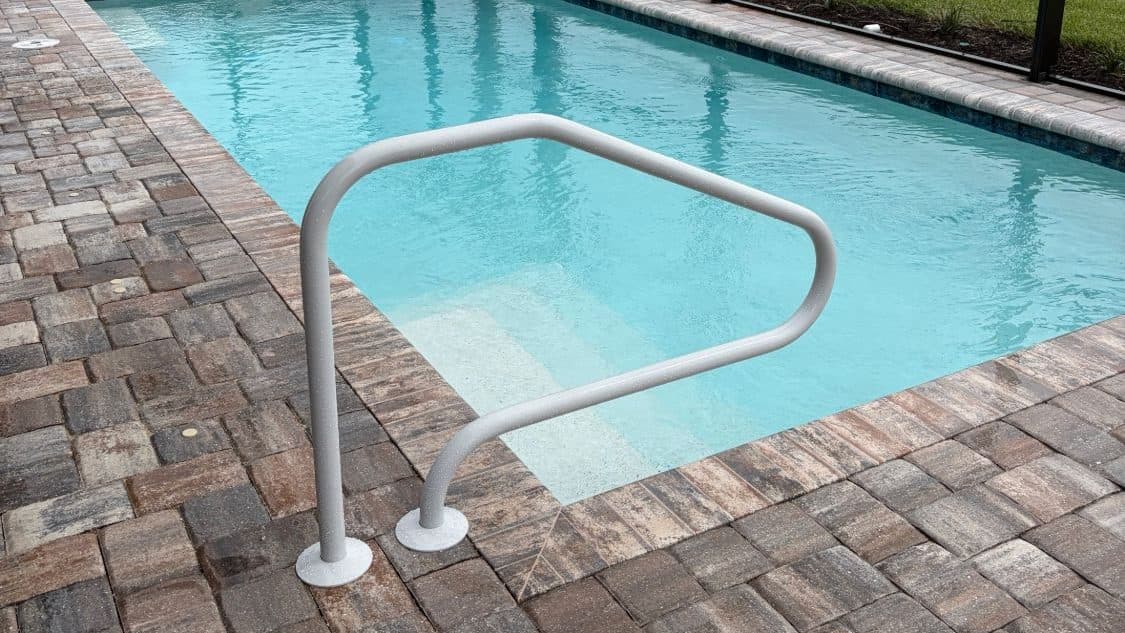
Walk around Babcock Ranch and look at the backyard pools, and you'll notice something: a lot of them have nice wide entry steps and no railing anywhere near them. Many of the pools that came with new homes here were finished without one. It's not something most buyers think to ask about during a home purchase, and it's often not noticed until a parent visits, a guest slips, or getting in and out of the pool just starts to feel less steady than it used to.
The good news is that this is one of the easier things to fix on a finished pool. You don't need to drain anything, and you don't need to rebuild your steps.
Why a railing matters more than people expect
Pool steps are wet, often a little slick, and you're usually stepping down onto them while barefoot and looking at the water instead of your feet. Without anything to hold onto, the only support is your balance. That's fine for a lot of people a lot of the time, but it's exactly where slips happen.
A handrail helps:
- Older parents, grandparents, and guests who'd love to use the pool but feel unsure on the steps
- Anyone with knee, hip, or back issues, or anyone recovering from surgery, for whom stepping down into water without support is genuinely hard
- Kids, who move fast on wet surfaces and don't always look where they're going
- Everyone at night, when steps are harder to see and the deck is still wet from the afternoon storm
It's also about getting out. Climbing up wet steps with tired legs after a swim is when a lot of people realize they want something to grab.
What a handrail actually looks like on an existing pool
The most common option for a finished pool is a deck-mounted handrail: a curved rail anchored into the deck beside the steps, reaching down into the water so you can hold it all the way in and out. Because it mounts in the deck rather than the pool itself, it can be added to a pool that's been finished for years.
A few choices are worth thinking about:
Rail shape and size. Rails come in different bends and lengths depending on how far they need to reach and where the steps are. The right one depends on your steps: how deep they go and where people naturally enter. That's something we look at in person rather than guess at.
Material. This is the choice that matters most, and it's where we do things differently from a lot of installers. It gets its own section below.
Why we install chemical-resistant rails instead of stainless steel
Most pool rails are stainless steel, and stainless has a problem in a pool: it sits half in chlorinated water and half in humid, salty air, all day, every day. Over time that shows up as rust spots, pitting, and brown staining, and it shows up faster with a saltwater pool, which plenty of homes here have. Polishing it helps for a while. Then it comes back.
So we install chemical-resistant polymer handrails instead. They have a strong metal core for support, sealed inside a high-impact polymer shell made to stand up to pool water. Here's what that gets you:
- No rust, pitting, or scaling. The outside of the rail isn't metal, so there's nothing to rust, and no brown streaks running down your steps.
- Built for chlorine and salt. The shell is made to resist pool chemicals, chlorine, acid, and salt, so it holds up whether you have a traditional chlorine pool or a salt system.
- Cooler to the touch. Bare stainless steel in the Florida sun can get uncomfortably hot. A polymer rail stays noticeably cooler, so you can actually grab it on a summer afternoon.
- UV resistant. It's made to handle years of direct Southwest Florida sun without breaking down or fading.
- Colors that fit your yard. They come in colors besides silver, so the rail can blend in with your deck, pavers, or screen enclosure instead of standing out.
- Low maintenance. No polishing, no rust treatment. Rinse it off now and then and that's it.
They're designed, and many are made, right here in Florida, by people who know exactly what our sun, humidity, and salt do to pool equipment.
How we install one
Adding a rail to an existing pool is a straightforward job, but it has to be done right, because a rail people lean their weight on can't wobble. Most pool decks in Babcock Ranch are pavers, which look great but sit on a bed of sand. Sand can't hold a rail steady on its own, so we build it a proper foundation underneath. Here's what that looked like on a recent install here in town.
1. Plan the spot. We look at your steps and deck, figure out which side people naturally enter from, and pick the rail that fits your steps. Then we mark exactly where each leg of the rail will land.
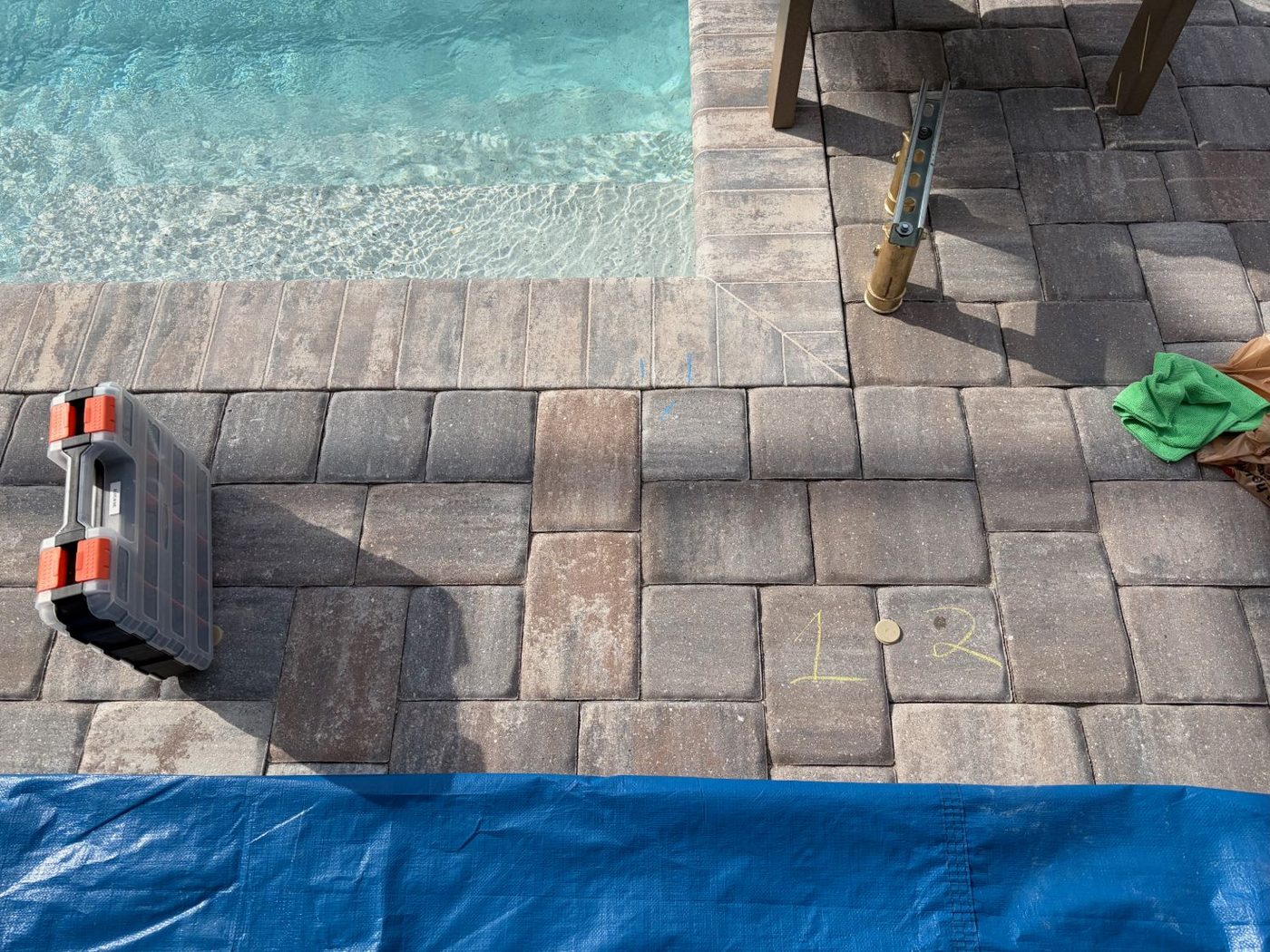
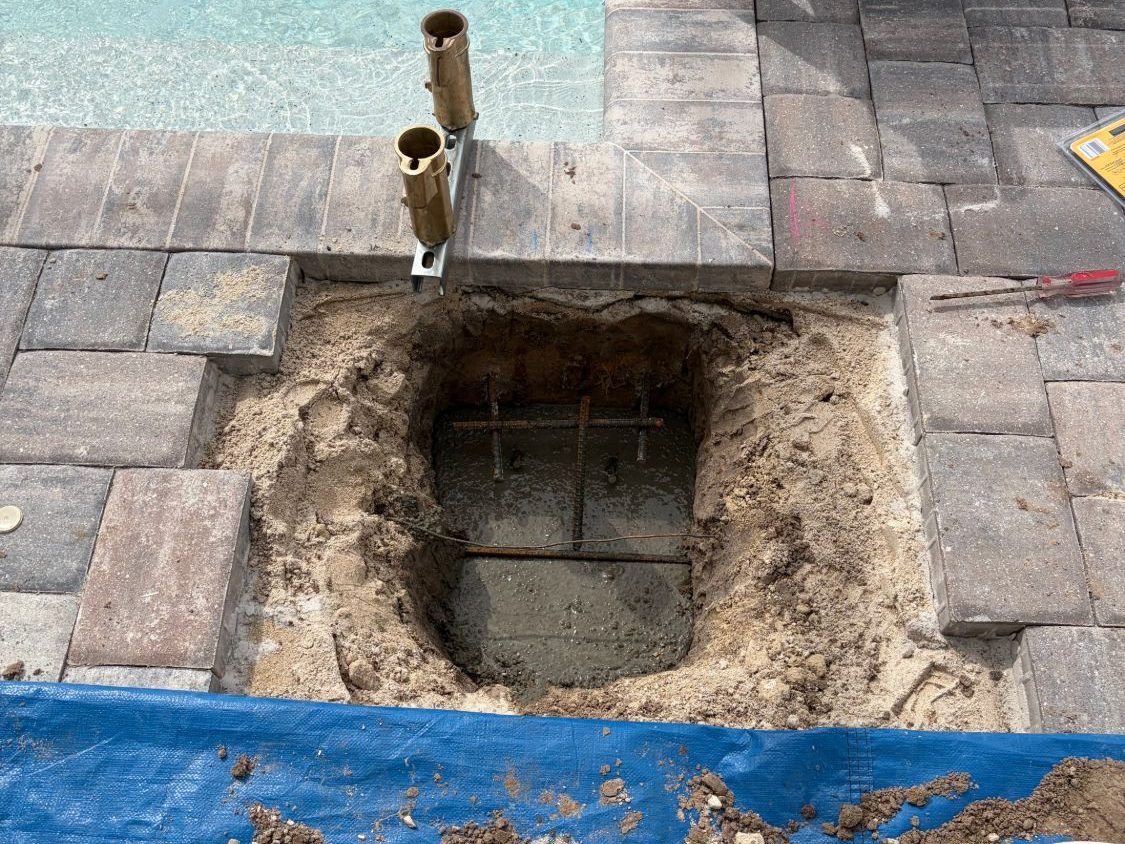
2. Build a footing under the pavers. We lift the pavers, dig out the sand, and pour a concrete footing reinforced with rebar. The two anchor sockets the rail locks into are held in a jig, so they set at exactly the right spacing and angle while the concrete cures.
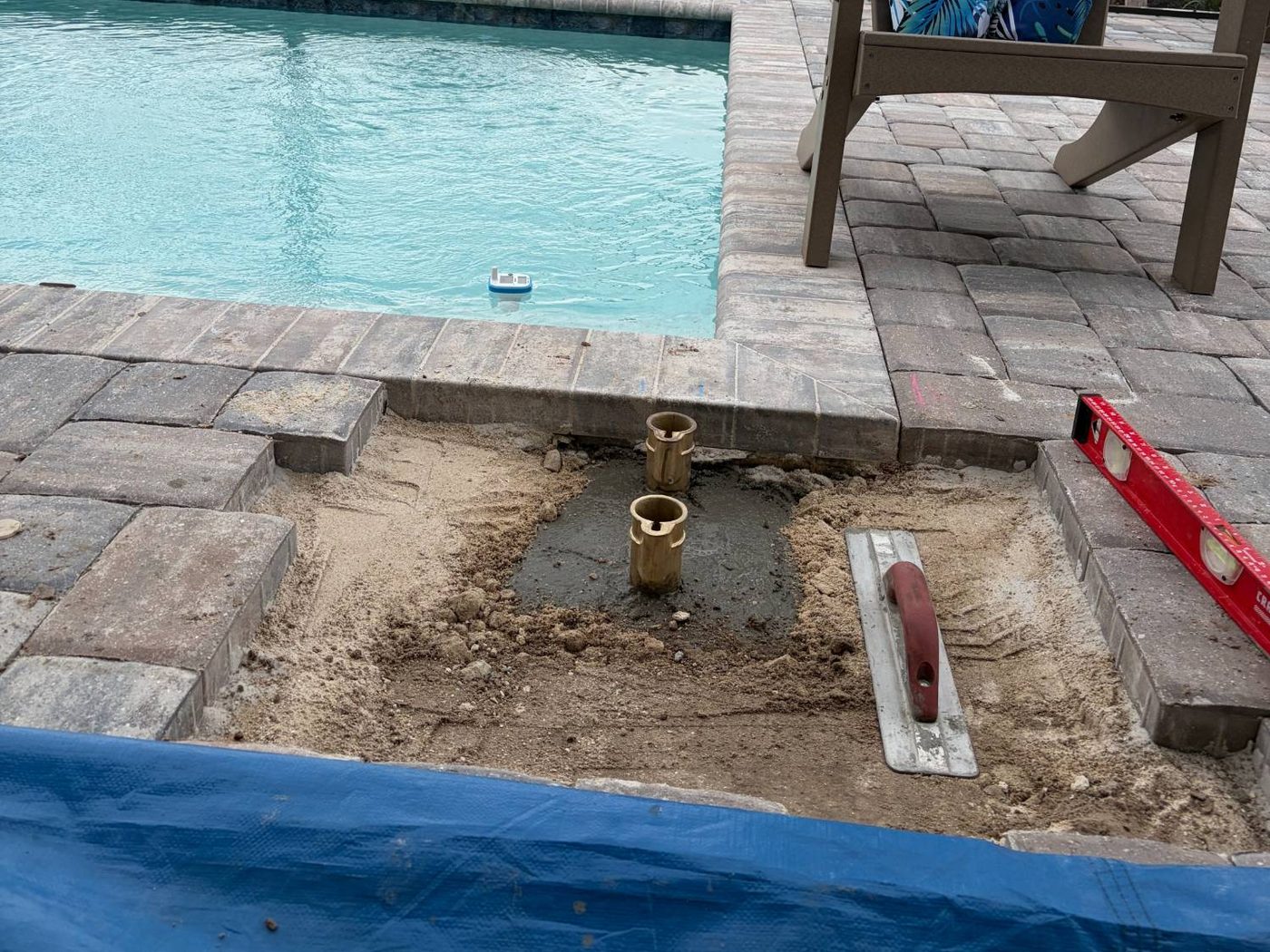
3. Put the deck back and set the rail. The pavers go back down around the anchors so the deck looks the way it did before, and the rail drops into its sockets. It should feel completely solid when you put your weight on it. If it doesn't, it isn't done.
On a poured concrete deck the job is simpler: we drill into the deck and set the anchor sockets directly.
Either way, there's no need to drain the pool, and the pool shell itself isn't touched.
Ladders are an option too
If your pool has a spot where a second way in and out would help, like the deep end on the far side from the steps, a deck-mounted ladder works the same way, comes in the same chemical-resistant material, and is installed the same way. Some homeowners add both.
Getting a railing added to your pool
If your pool came without a handrail and you've been meaning to do something about it, this is a quick upgrade that makes the pool safer and easier for everyone who uses it, especially the people who've been sitting on the edge instead of getting in.
We add handrails and ladders to existing pools here in Babcock Ranch. Call or text us or request a free quote, and we'll come take a look at your steps and deck and tell you what would work best.
Quick answers
Can a handrail be added to a pool that's already built?
Yes. A deck-mounted handrail is anchored into the pool deck beside the steps, so it can be added to a finished pool without draining it or touching the pool shell.
What kind of pool handrail holds up best with a salt pool?
A chemical-resistant polymer rail. Its outer shell is made to stand up to chlorine, salt, and sun, so it won't rust, pit, or scale the way stainless steel can in a saltwater pool.
Can a handrail go on a paver pool deck?
Yes. Pavers sit on sand and can't hold a rail on their own, so we lift them, pour a rebar-reinforced concrete footing underneath, set the rail anchors in it, and put the pavers back.
Do polymer pool handrails get hot in the sun?
They stay cooler to the touch than bare stainless steel, which makes a real difference on a pool deck in the Southwest Florida sun.